
The short answer
- Wall condition comes first: damaged sheathing or window flashing adds work beneath the north or windward wall's panels.
- Panel selection changes the scope through thickness, insulation backing and the profile chosen for the sunny wall.
- Access and finishing add labor around high gables, corner posts, windows, doors, soffits and fascia.
Panels, Wall Preparation and Finishing Details
Vinyl siding installation cost depends on the wall beneath the panels, the selected product and the work around its edges. A broad wall with few openings involves different labor than the same area broken up by doors, windows and a high gable. Call with the wall that concerns you; measurements and material decisions are part of the job discussion.
The north wall's surface and backing
The shaded north wall needs an assessment of surface film, drainage and the condition beneath the old siding. Green discoloration alone doesn't establish that the sheathing needs replacement. Tell your siding contractor whether the mark sits below a window, follows a seam or returns near the base.
Preparation can include removal, disposal, sheathing repairs, a water-resistive barrier and flashing corrections. Those are separate tasks from hanging panels. Two written scopes can look similar while only one includes repairs behind the cladding. The scope should explain how newly exposed damage will be documented and how added work will be agreed upon.
The south wall's panel choices
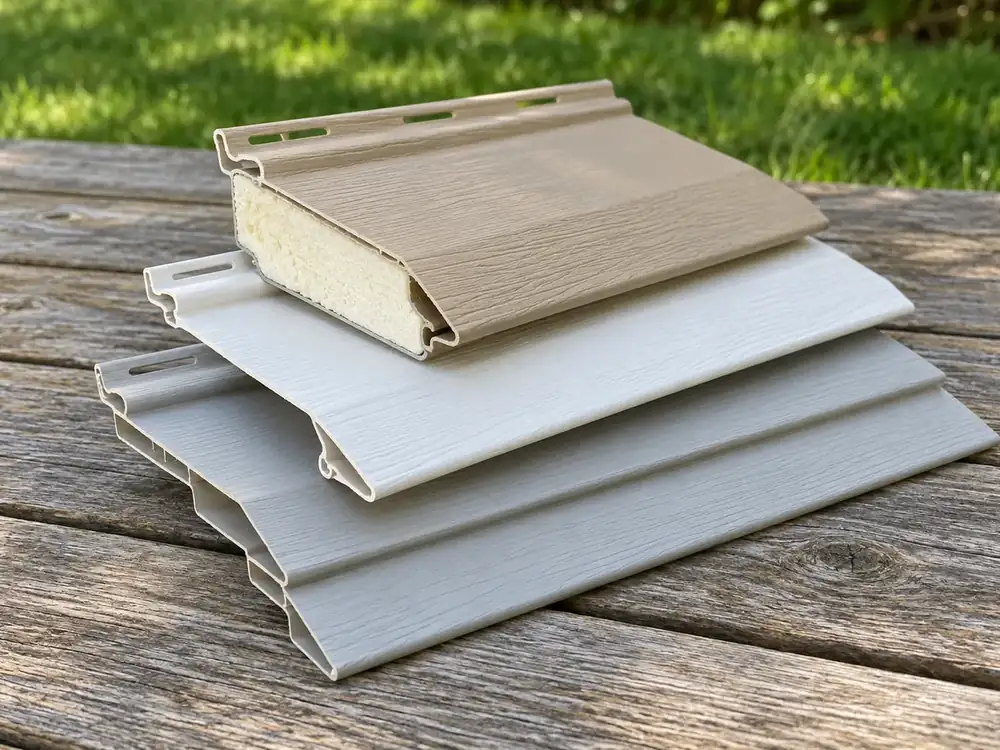
Panel grade, thickness, backing and profile change what goes on the sunny south wall. CertainTeed identifies panel thickness as one element affecting durability and how straight panels look. Thickness alone doesn't describe the whole product. Standard and insulated panels also use different assemblies and accessories.
Lap profiles, a board-and-batten look and shake-style sections need different layouts. Mention fading, waves or a desired profile change during the call. A vinyl siding install price should identify the actual panel line and profile, rather than leave the selection at a color name.
The windward wall's corners and openings
Corners, windows and doors add finishing work to the wall that receives wind-driven rain. Corner posts, receiving channels, flashing and accessory blocks need to fit the selected panels. CertainTeed's accessory measurement page treats windows, doors, corners and eaves as distinct measurements.
How much does vinyl siding cost to install around several windows? The answer depends on the opening details, trim treatment and repairs included. Describe loose corner pieces or staining near window edges on the call. A panel-only calculation leaves those tasks out.
High gables and the roof edge
House height, roof shapes and access affect labor at gable ends and trim. Staging, moving materials around porches and fitting short sections add work beyond the main wall area. Soffit and fascia handled during the same project should have their own description, including which existing pieces remain.
Season also affects planning: daylight, working conditions, material handling and any finish requirements shape the sequence. A calendar date alone doesn't establish a discount. Tell your siding contractor about narrow side yards or a porch below the gable while discussing the project.
Comparing the written work
Compare vinyl siding cost per square foot only when both scopes describe equivalent work. Vinyl siding cost per square uses a different area unit, so request the unit definition with the wall measurements. Neither unit replaces a list of included tasks.
| Wall or part | Details the scope should name |
|---|---|
| North wall | Removal, disposal, backing condition and repair procedure |
| Sunny wall | Panel line, thickness, backing, profile and color |
| Windward corners | Flashing, posts, channels and opening treatments |
| Gables and eaves | Access, layout, soffit and fascia work |
How much does vinyl siding cost installed when the old wall needs repairs? The condition uncovered during removal changes the work, so the written scope needs a process for those findings. Compare supplied panels with completed installation carefully. One of our local siding partners will set out the included work and its price with you before work begins.
Older layers stay undisturbed
Old paint and unidentified siding need care during replacement planning. EPA's renovation information says homes built before 1978 are more likely to contain lead paint; EPA's asbestos advice supports leaving suspect materials undisturbed. Very old siding may contain asbestos, and New Hampshire's asbestos rules address cementitious siding specifically. Leave those layers alone and call. Photos taken from the ground can show the wall and its direction; don't let children or pets near loose material from the wall.