
The short answer
- Moisture details matter with either material: the shaded north wall needs sound flashing and a drainage path behind the siding.
- Upkeep favors vinyl when avoiding routine repainting matters, while fiber cement offers a painted board finish on sunny walls.
- Installation and appearance differ through board weight, panel movement, corner details and the layout around high gables.
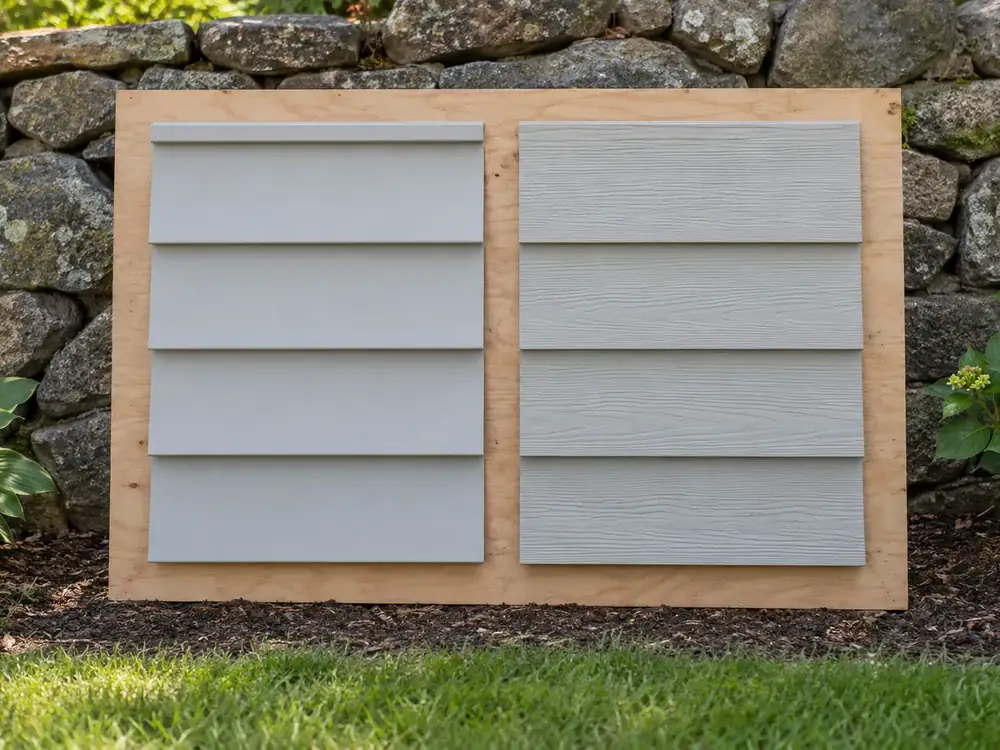
Material Choices From Shaded Walls to Sunny Gables
Vinyl suits homeowners who want to avoid routine repainting, while fiber cement suits a painted board appearance and a denser material. For a southern New Hampshire or northeastern Massachusetts house, compare the wall assembly and future upkeep alongside the sample. Fiber cement siding vs vinyl siding is a decision about the complete exterior, including corners, openings and roof edges.
The shaded wall and moisture
Neither cladding replaces drainage and flashing behind the north wall. Surface film in shade differs from water entering at a window or trapped behind boards. Tell your siding contractor where discoloration starts and whether an indoor stain lines up with it.
Vinyl doesn't rot like wood, but wood sheathing behind vinyl can deteriorate when it stays wet. Fiber cement resists rot, yet joints, clearances and its finish still need attention. Under freeze-thaw conditions, keeping water from lingering in vulnerable details matters with either material. That is a reason to discuss the wall's drainage rather than judge solely by surface appearance.
The sunny wall through temperature changes
The south wall needs a product suited to temperature changes and an installation that allows the required movement. NOAA's New Hampshire climate summary describes cold winters and warmer summer conditions, making both seasons relevant to material selection. James Hardie's material FAQ notes vinyl's susceptibility to cold cracking and heat damage.
Vinyl expands and contracts; CertainTeed describes movement slots in its panel fastening flange. Fiber cement uses a different fastening and joint system. During the call, identify waves, cracks or failing paint on the sunny wall. Ask how the proposed product and finish suit that exposure.
The windward side, impact and fire
A branch or falling ice can damage siding, so describe the affected wall and visible breakage without handling loose pieces. Vinyl may crack; fiber cement can chip or fracture. Keep ground-level photos and a dated note of the visible condition. Material choice doesn't replace an assessment of the flashing at nearby corners.
Fire performance differs too. James Hardie describes its fiber cement siding as noncombustible; vinyl is vulnerable to heat and flame. That is a material distinction, not a claim that a completed house cannot burn.
| Decision | Vinyl | Fiber cement |
|---|---|---|
| Finish upkeep | Usually no routine repainting | Painted finishes eventually need attention |
| Temperature details | Requires room for panel movement | Uses product-specific joints and clearances |
| Water management | Needs flashing and drainage behind panels | Also needs flashing, drainage and clearances |
| Handling | Lighter panels | Heavier boards and different fastening needs |
| Appearance | Molded lap, vertical and shake looks | Smooth or textured painted-board looks |
| Gable work | Panel layout and receiving channels | Board handling, joints and finish details |
Trim, gables and the work of installation
High gables make handling, access and finishing part of the material decision. Heavier fiber cement boards need suitable support and fastening; vinyl panels need their own movement allowances and accessories. A low ranch with simple walls presents a different task from a tall house with dormers and narrow side access.
Hardie siding installation cost reflects those handling and finishing tasks as well as wall preparation. Hardie board siding cost also depends on whether the selected board arrives finished or needs painting. For a fiber cement siding cost vs vinyl comparison, keep removal, sheathing repairs, flashing and trim consistent between scopes. One of our local siding partners will explain the differences in the proposed work and agree on pricing with you ahead of installation.
Finish, sound and neighborhood fit
Appearance and upkeep should fit how you want to care for the house. Fiber cement can be repainted; most vinyl relies on its manufactured color. Neither material alone determines indoor noise. Discuss the whole wall assembly and existing window gaps if sound is a concern, rather than assume heavier siding will solve it.
Resale depends on the house, condition and market; a material choice doesn't establish a return. Compare samples beside the roof and window trim. A simple cape might suit a restrained lap profile, while a gable accent needs deliberate transitions.
Approval can also shape the selection. New Hampshire's condominium statute ties exterior appearance changes to the condominium instruments; discuss the proposed material and color with the board before ordering. In Massachusetts, Lexington's Historic Districts Commission approves exterior renovation and color-change plans within its historic districts. Mention either situation when you call so approvals become part of planning.
Existing materials and safe observations
Leave old siding and paint untouched while discussing replacement. EPA identifies lead-paint concerns in pre-1978 homes, and MassDEP notes that some older siding contains asbestos. Call about the wall now. If you take photos, stay on the ground and include the wall's direction; keep children and pets clear of detached or loose pieces.