
Salem, New Hampshire
Commercial Siding in Salem, NH
Our local siding professionals repair and replace siding on occupied buildings around Salem, from shaded condominium walls to loose retail entrance panels. Call now and describe the building, the affected wall and what residents or tenants are seeing.
- Calls answered 24/7
- Condo, apartment and small commercial buildings
- Serving Salem and nearby
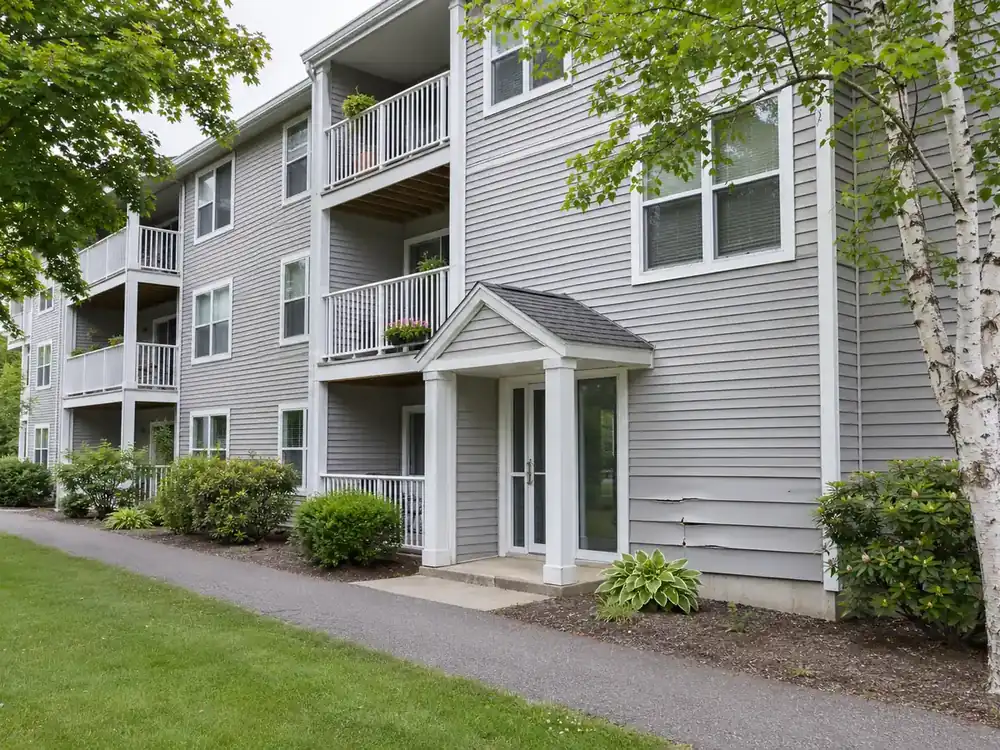
Condo, apartment and small commercial buildings
Buildings Covered in Salem and Nearby Towns
- Condominium communities: A condo association's siding choices for attached units include vinyl or fiber cement, matching profiles and consistent finishes across shared elevations.
- Townhome buildings: Lap siding and corner trim make townhouse siding replacement a discussion about where each phase ends and how neighboring units match.
- Apartments and multi-family buildings: Vinyl, wood or engineered wood on two- and three-deckers calls for a multi-unit building siding plan around porches and occupied entrances.
- Retail strips: Metal or lap panels near storefronts make retail building siding repair a matter of protecting customer routes beside the affected wall.
- Offices: Fiber cement or metal walls need an access plan where staging meets parking, deliveries or the main entrance.
- Churches and schools: Wood, vinyl or fiber cement at tall gable ends raises staging questions around entrances and regular building use.
- Medical offices: Lap panels and window trim call for clear separation between the work area and patient access along the building.
Building Siding Problems Ranked by Urgency
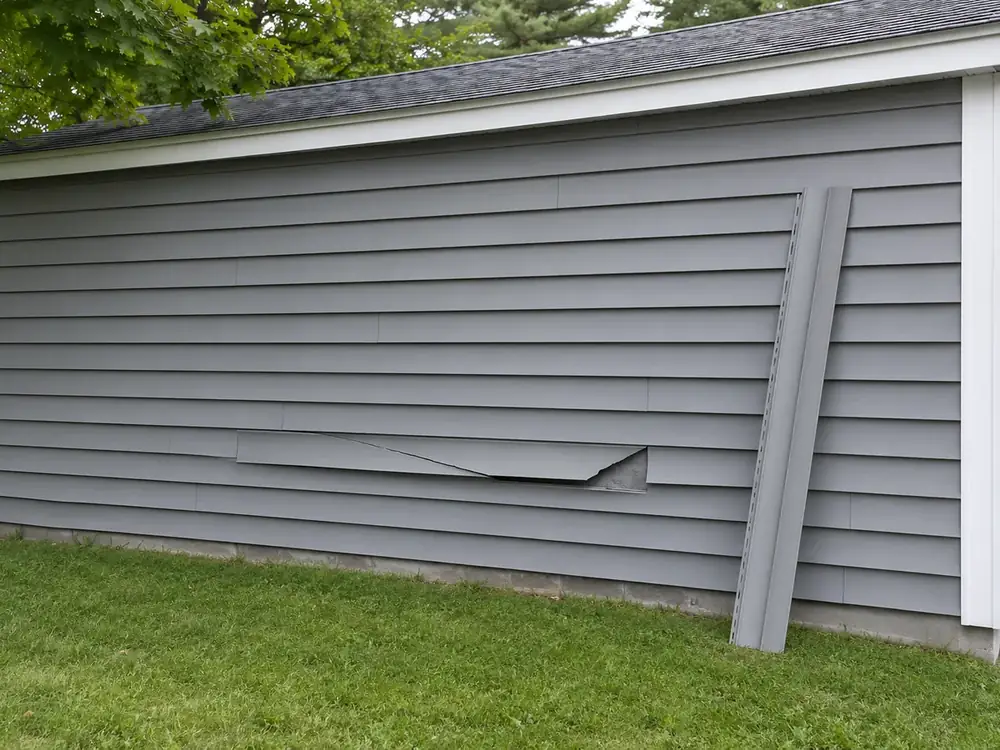
- Loose panels above occupied routes: A panel lifting beside an entrance or walkway needs attention first; keep people clear and call about its location. The work addresses the panel locks, fasteners and supporting wall.
- Water behind the windward wall: Interior staining near an outside corner can accompany failed seams or flashing. Your siding contractor examines the water path and includes affected backing in the repair scope.
- Damaged trim at roof edges: Dark, peeling fascia or separated soffit needs inspection of the roof edge and adjoining siding. Describe whether the damage is above a door, balcony or gable.
- Impact damage near the base: Cracked corners beside parking or service paths need replacement pieces and a check of the adjoining courses. Share the location from ground level.
- Warped or cracked sunny elevations: Damage extending across several south-facing units calls for comparing a panel repair with replacement of the wall. Describe how many units share the affected elevation.
- Uneven repairs on shaded walls: Lighter replacement panels or persistent surface film can make a north elevation look patchy. The association can discuss matching material and the extent of any proposed replacement.
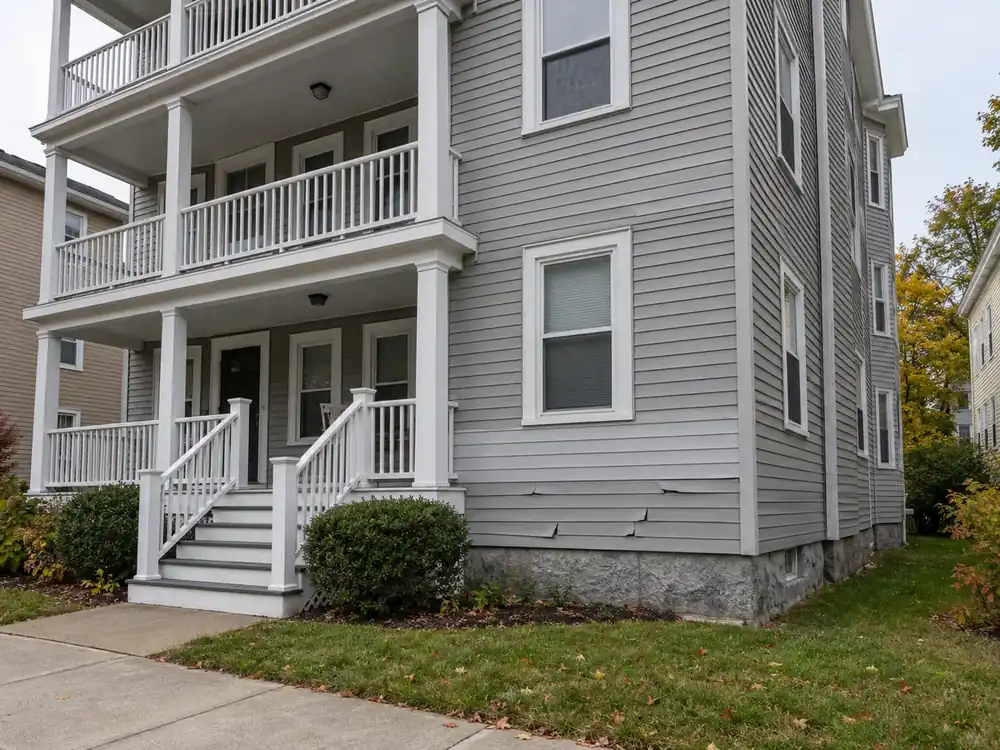
Keeping Buildings in Use During Siding Work
The work plan pairs the damaged wall with access routes for residents, tenants and visitors.
| Option | When it fits | What it involves |
|---|---|---|
| Spot repair now | Damage is limited to several panels or one corner. | Replace affected pieces and examine adjoining trim without opening an entire elevation. |
| Phased wall or building work | Residents and tenants stay while several elevations need attention. | Divide townhome siding replacement or apartment work into sections, with protected routes around each work zone. |
| Full-building replacement | The owner or board wants matching siding across every elevation. | Coordinate removal, backing repairs, flashing and new panels throughout the building. |
| Trim, soffit and fascia together | Roof edges or window surrounds also need work. | Include those parts in the same visit and staging plan. |
Your siding contractor decides on site which option fits the walls and occupied access routes.
From the Building Call to Finished Walls
- Call and describe the building, the wall and the visible damage. A property manager calling about siding repair can mention occupied entrances and the affected unit numbers during the conversation.
- A local siding contractor takes the next steps with the manager or board. The discussion covers access, matching priorities and how the building is used.
- Your siding contractor examines the walls, trim and underlying layers where needed. The scope and price are explained before work begins, including proposed phases and staging.
- The agreed work ends with a walk around the affected elevations. The manager or board receives records identifying the work and materials used.
Siding Records for Managers and Association Boards
Keep a record for each building so later decisions start with the wall's repair history.
- Photos of each affected elevation before and after work, labeled by building and wall direction.
- The written scope and your siding contractor's notes on concealed damage and completed repairs.
- Product names, panel profiles and colors for matching future work at corners or adjoining units.
- Receipts for the siding work and any related trim replacement.
- A building log with repair dates and locations, helping a board plan maintenance across several buildings and budget for the next section.
What Affects Commercial Siding Cost Around Salem
- Wall area and story count determine how much siding and upper-wall access the building needs.
- Material and profile affect panel handling, cutting and matching across attached units.
- Damage behind old siding adds backing repairs and work at water entry points.
- Window trim, corners, soffit and fascia add separate lengths and connections.
- Scaffolding or a lift beside entrances requires space and protected routes.
- Phasing around occupied units and seasonal working conditions influence the work plan.
One of our local siding partners explains the proposed building scope and its price with the manager before work starts. The siding cost factors article breaks down removal, wall shape and finish choices.
Why Salem Building Managers Make the Call
- Calls answered 24/7: A manager can call when loose siding or a damaged entrance corner is noticed, including outside office hours.
- A building-specific conversation: One call starts with a local siding contractor and the needs of a condominium, apartment building, shop or office.
- Walls and access considered together: Shaded siding, sunny elevations and high gable trim belong in the same discussion as resident routes and staging space.
- Scope stated before work: Managers and boards hear which walls, underlying repairs and finish details the proposed work includes.
- Records for later decisions: Product details, wall photos and dated repair notes help coordinate maintenance and matching across multiple buildings.
Keeping People Clear of Building Siding Work
Keep staff, residents, customers and parked cars away from loose or bulging siding and the area beneath it; call now about the affected entrance or wall.
- Keep pedestrian routes outside ladders, scaffolding and active work zones; OSHA's scaffold guidance describes barricading areas below scaffolds where falling objects could strike employees.
- Leave elevated panel repairs to your siding contractor; OSHA's scaffold requirements require fall protection for workers more than ten feet above a lower level on a scaffold.
- Don't send building maintenance staff up to pull, fasten or remove a loose panel; describe the height and nearby occupied spaces from the ground during the call.
Houses as well
Siding Work for Houses Too
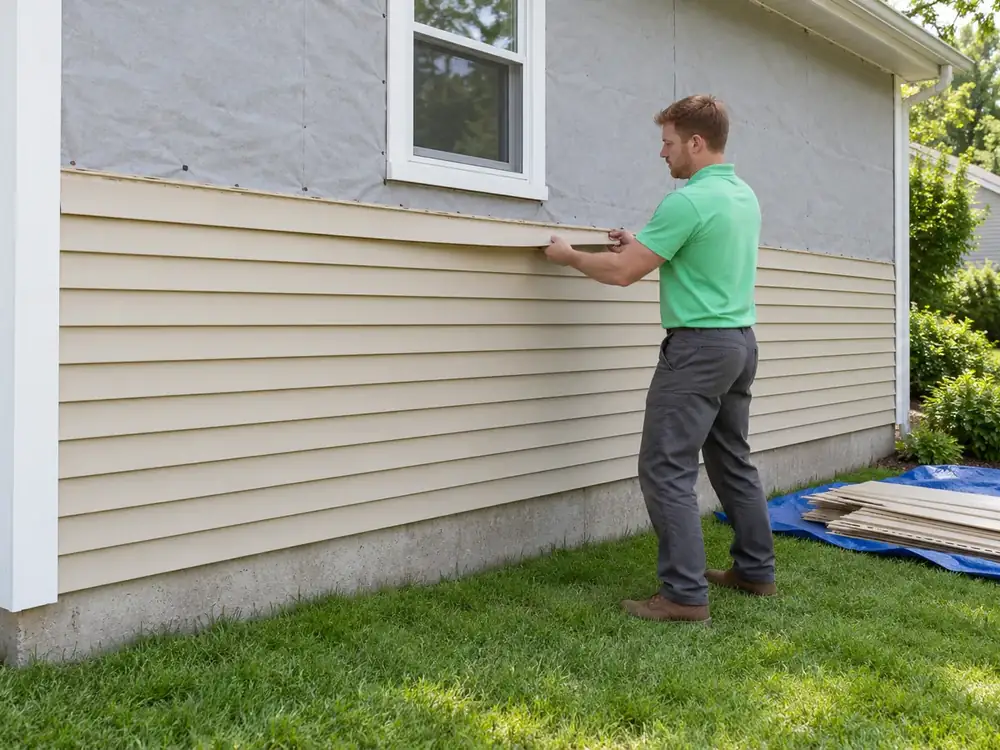
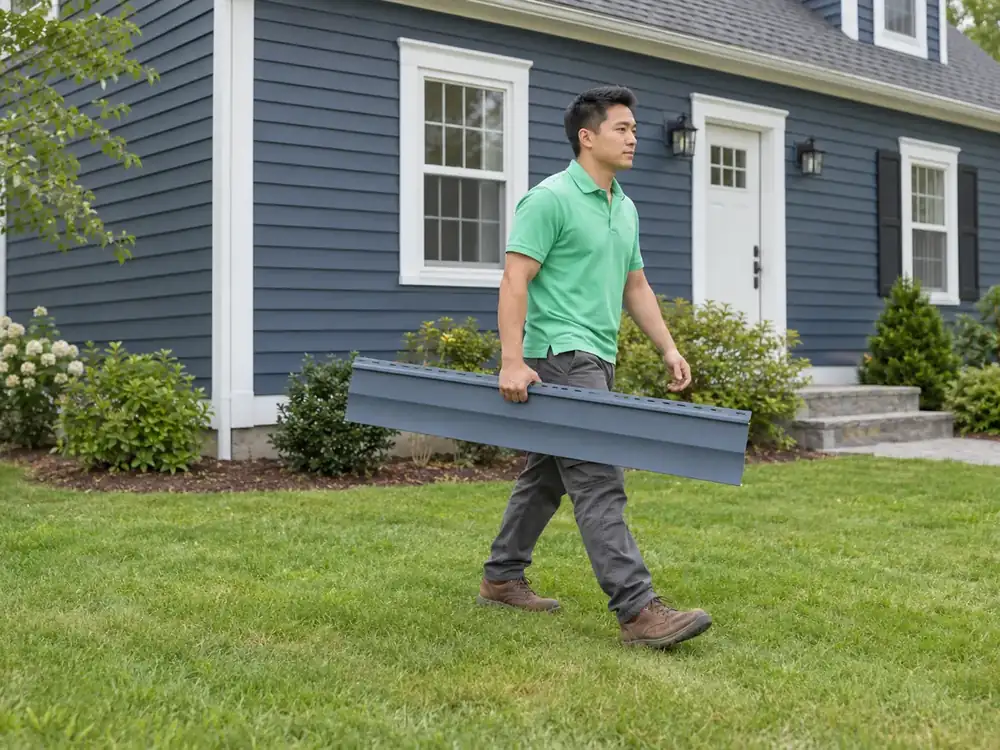
Owners and managers can call the same number for siding replacement, panel repair or new vinyl siding at their own house.
Commercial Siding Around Salem
Commercial siding work serves associations and building managers in Salem, Londonderry, Nashua, Manchester and towns in the Merrimack Valley of Massachusetts, including Methuen and Haverhill.
Commercial Siding Questions
Does the residential siding line also take calls about commercial walls?
Yes, the same line handles siding calls for commercial buildings and houses. Describe whether you're calling for an association, a rental building or a business property. Include the wall where damage shows and any entrance beside it. The conversation starts with the building's use and the affected siding.
Which kinds of occupied buildings get siding work?
Siding work covers condominium and townhome buildings, apartments, multi-family buildings, retail strips and offices. Churches, schools and medical offices are also included. For an apartment, mention stacked porches or upper gable walls; for a shop, describe customer access beside the damaged panels. Those details shape the repair and staging discussion.
Who chooses replacement siding for a condominium community?
The association decides through its governing documents and decision process. In New Hampshire, RSA 356-B:30 limits unit-owner changes to exterior appearance to the extent and conditions allowed by the condominium instruments. Call about condo siding replacement now; material and color decisions can be discussed with the board as the scope develops.
Can residents and tenants stay during siding replacement?
Phased work can keep residents and tenants in place when safe access and separated work zones are maintained. Your siding contractor plans sections around doors, balconies and shared paths. For association projects, condominium siding contractors discuss where one phase ends, how the exposed wall is protected and how finishes meet at adjoining sections.
Should maintenance staff climb up to secure a loose panel?
No, maintenance staff should leave elevated siding repairs to your siding contractor and keep people clear below. OSHA's construction guidance describes scaffolds used for siding and the fall protection involved in work at height. Call from a safe position and describe the panel's location without moving beneath it or pulling at its edges.
Which building details have the biggest effect on the work's cost?
The amount of wall, story count and siding material usually lead the discussion. Hidden backing damage, window trim, soffit, fascia and entrance staging add work beyond the panels. A whole elevation of attached units also raises matching and phasing decisions. Describe the affected buildings during the call so the scope starts at the right scale.
Call now about your building's damaged wall so the manager or board can discuss siding repairs, matching and occupied entrance access.
Call (603) 633-5699