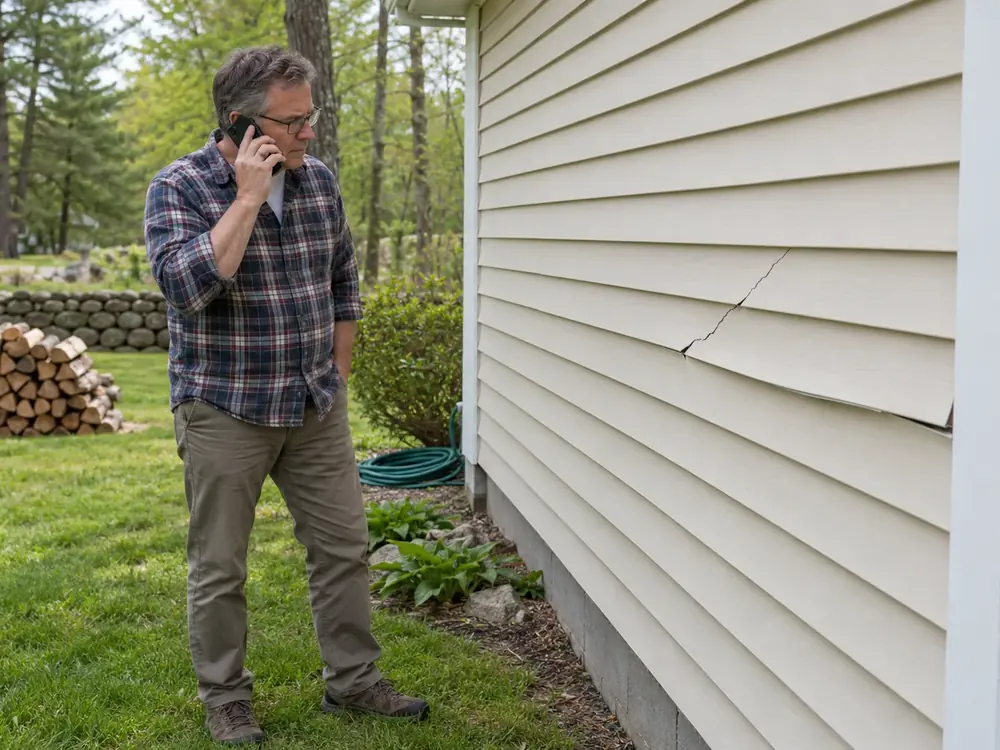
The Path From Dialing to Finished Siding
Your call starts a conversation about the affected wall and leads to an inspection, a defined scope and agreed work.
Start with the wall you can describe
Tell the person answering which side of the house is giving trouble and what you see there. A shaded wall with dark lower courses is a different starting point from a sunny wall with wavy panels. Give your town and state, and say whether the property is a house, a building with several units or business premises. You don't need a material name or a repair diagnosis.
Connect the description to a site visit
The call connects you with a siding contractor in our network, who takes the wall description forward and arranges to examine the house. Mention concerns about access beside the wall, nearby planting or a high gable. Your siding contractor looks at the surrounding panels and trim as well as the obvious defect. Where the problem calls for a closer look behind the siding, discuss the opening needed for that inspection.
Inspect the shaded north wall
The north-wall check starts with the lower courses, stained areas and edges around openings. Say whether a mark follows a horizontal seam or sits below one window. Your siding contractor separates a surface concern from damaged siding or backing before deciding what belongs in the repair. Photos taken from the ground can help record where you first noticed the change.
Compare the sunny south wall
The south-wall inspection focuses on the pattern of fading, distortion or failing paint. Describe whether the finish has changed evenly or one patch looks different. Your siding contractor examines how panels sit against the trim and whether existing pieces remain suitable for repair. Discuss samples against the wall when a different material or color is part of the proposed work.
Trace loose edges on the windward wall
The windward-wall check follows loose panels, corners and marks around windows. Mention when you first noticed movement or an interior stain beside the affected area. Your siding contractor examines the connections between siding, trim and the layers behind them. A visible gap helps locate the inspection; the gap alone doesn't establish the full repair.
Include trim and gable ends
Trim inspection covers corner boards, window surrounds, soffit and fascia where they meet the wall. Point out a high loose piece from a safe place on the ground. Keep people and pets away from falling fragments, and stay off ladders while waiting. Leave attached panels and old finishes in place for the inspection.
Agree on the work and inspect the result
Your siding contractor explains the proposed repairs or replacement, material choices, access, debris handling and price before work starts. Discuss any further damage found when siding is opened and agree on changes before that extra work proceeds. After the work, walk the affected elevations together. Review corners, openings and cleanup, then ask about care for the siding and finish that were installed.